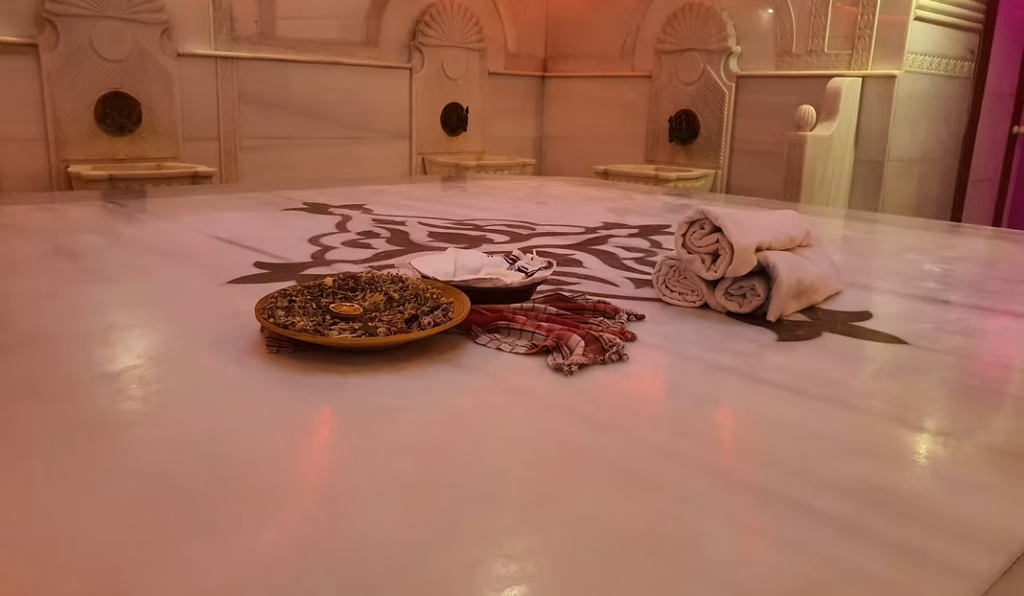
Imagine stepping off the cobblestones of modern Istanbul and crossing a threshold that transports you instantly back to the 16th century. The noise of traffic fades, replaced by the rhythmic sound of water splashing against marble and the faint, comforting scent of olive oil soap. Above you, beams of celestial light pierce through the misty air, dancing on wet stone surfaces that have witnessed the rise and fall of empires. This is not a movie set; this is the Historical Turkish Bath in Istanbul, a living, breathing monument to the past.
At Acemoğlu Hamam, we are custodians of a legacy that spans five centuries. In a city teeming with history, it is one thing to look at a monument from behind a velvet rope, and quite another to immerse yourself physically within it. For the culture vulture and the history buff, our hamam offers a rare opportunity to touch, feel, and experience the Acemoğlu Hamam History exactly as the Ottomans did. This is the story of our domes, our stones, and the timeless sanctuary that awaits beneath them.
Echoes of the Past: The Origins of Acemoğlu Hamam
To understand the soul of Acemoğlu, one must first understand the era of its birth. Built during the height of the Ottoman Empire, this structure stands as a testament to a time when Constantinople was the center of the world. While precise foundation dates can sometimes be lost to the mists of time, the architectural DNA of the building places it firmly within the golden age of Ottoman Architecture.
In the 16th century, the hamam was not merely a place for hygiene; it was a civic institution, often endowed by sultans, pashas, or high-ranking military officials—in our case, the Acemoğlu corps of the Janissaries. This connection to the military elite of the empire adds a layer of rugged prestige to the building. One can easily imagine the Janissaries, the elite infantry units of the Sultan, washing away the dust of campaigns on these very marble slabs.
As a Cultural Heritage Site, every brick and archway here tells a story. The walls have absorbed the conversations of merchants discussing the Silk Road trade, poets reciting verses, and locals sharing the gossip of the Fatih district. Unlike modern structures built for transience, this Historical Turkish Bath in Istanbul was built for eternity. The masonry techniques used ensured that despite earthquakes, fires, and the relentless march of time, the sanctuary remained standing, offering a warm embrace to anyone seeking refuge from the outside world.
Architectural Marvels: Unlocking the Secrets of the Domes
The defining silhouette of any traditional hamam is its dome. However, in Ottoman Architecture, the dome is more than a roof; it is a representation of the heavens. The transition from the square base of the building (representing the earth) to the circular dome (representing the sky) is a journey of spiritual ascension.
At Acemoğlu Hamam, this structural genius is evident in the way the weight of the massive stone roof is distributed effortlessly down to the walls, creating a cavernous, column-free space in the main hot room. This open space was essential for the communal nature of the bath, allowing heat to circulate evenly without obstruction. The architectural style reflects the Mimar Sinan Era Style, characterized by perfect symmetry, rational geometry, and a sense of serene grandeur. Even if not every brick was laid by the Great Architect Sinan himself, the influence of his school and the master builders of his time is undeniable in the majestic proportions of our sanctuary.
The “Elephant Eye” Windows and Light Play
If you look up while lying on the central stone, you will notice small, round or star-shaped glass openings dotting the dome. These are known in architectural terminology as Filgözü (Elephant’s Eye). They are the heart of the Authentic Hammam Experience.
Before the advent of electricity, these windows were the sole source of illumination. But their function goes beyond utility. The glass is often hand-blown and thick, designed to trap heat while letting in light. The result is a soft, diffused glow that changes with the passing of the sun. In the morning, the light is crisp and energizing; by late afternoon, it turns golden and moody. This play of light and shadow creates an ethereal atmosphere, turning the steam into a glowing mist. It is a natural light show that has been running daily for 500 years, designed to induce a state of meditative trance.
Acoustic Engineering of the 16th Century
Have you ever noticed how the sound of water in a hamam feels different? It is not an accident; it is engineering. The domes and vaulted ceilings of the Mimar Sinan Era Style were designed to master acoustics. The curvature of the dome captures sound waves and rolls them back down, creating a natural reverberation.
In the 16th century, this served two purposes. First, it amplified the soothing sound of flowing water, making a small stream sound like a rushing river, which has a calming effect on the human psyche. Second, it created a veil of privacy. The echo distorts human speech just enough that while you can hear that people are talking, you often cannot distinguish the exact words from across the room. This acoustic privacy allowed high-ranking officials and commoners to share the same space with a sense of solitude. Today, this acoustic miracle ensures that the outside world feels miles away, preserving the sanctity of The “Hararet” (Hot Room).
More Than a Bath: The Social Role of the Hamam in Ottoman Times
To view Acemoğlu Hamam only as a place to wash is to miss its historical significance. For centuries, this was the social media, the newsroom, and the club of Istanbul. Ancient Bathing Rituals were deeply woven into the fabric of daily life.
The ritual would begin in the Camekan (entrance hall), which traditionally featured a fountain and comfortable divans. Here, coffee was sipped, sherbet was served, and politics were discussed. Then, guests would move to the warm room, and finally to the Hararet. The centerpiece of this room is the Göbek Taşı (Belly Stone), a large, heated marble platform where bathers lie to sweat out toxins.
Surrounding the central stone are the Kurnas (marble basins). In the past, tellaks (attendants) would not just scrub bodies; they would act as therapists, listening to the woes of their patrons. The hamam was where mothers looked for potential brides for their sons, where tradesmen sealed deals with a handshake over steam, and where communities bonded.
Here is a look at how the role of the Hamam has evolved while staying true to its roots:
| Feature | The Ottoman Era (Then) | The Acemoğlu Experience (Now) |
| Primary Purpose | Essential hygiene (few homes had baths) & Social Hub. | Wellness, detoxification, and Cultural Immersion. |
| Lighting | Sunlight via Filgözü domes & candles. | Sunlight via Filgözü domes & ambient mood lighting. |
| Heating | Wood-fired hypocaust (Cehennemlik) under the floor. | Modernized heating systems maintaining the original floor channels. |
| Social Aspect | Community news, matchmaking, politics. | Digital detox, relaxation, connecting with history. |
| Water Supply | Aqueducts and cisterns. | Filtered, purified, temperature-controlled water. |
Preservation vs. Modernity: How We Keep the Spirit Alive?
Stewarding a Historical Turkish Bath in Istanbul is a delicate balancing act. How do you provide 21st-century hygiene and comfort standards without destroying the 16th-century soul? This is the challenge we face daily at Acemoğlu Hamam.
Preservation is not just about keeping the walls standing; it is about keeping the function alive. We resist the urge to turn our historic structure into a “spa” in the Western sense. You will not find neon lights or plastic fixtures here. Instead, we invest in maintaining the original marble of the Kurnas, ensuring that the erosion caused by centuries of water pouring remains visible—a tactile connection to the past.
We maintain the traditional hypocaust principle for heating. In the old days, a furnace room known as the Cehennemlik (Hell) was located beneath the hamam, sending hot smoke and air through channels under the marble floor. Today, while the fuel source is cleaner and more efficient, the concept remains: heat must rise from the stone, warming the body from the core upwards. This commitment to the Authentic Hammam Experience ensures that when you lie on the warm stone, you are feeling the same comforting heat that a Janissary felt in 1520.
Experiencing the Living History: Why Visit Today?
In an age of virtual reality and digital museums, Acemoğlu Hamam offers something radically different: a tangible, sensory connection to history. We are a “Living Museum” where you are not a passive observer; you are an active participant.
When you enter The “Hararet” (Hot Room), you are stepping onto a stage set centuries ago. The humidity that wraps around you is the same; the view of the dome above is the same. As the attendant performs the exfoliation, they are using techniques passed down through generations of masters.
Visiting Acemoğlu is an act of slowing down. It is a rejection of the “fast travel” culture. It invites you to linger, to observe the craftsmanship of the stone, to marvel at the play of light, and to respect the Ancient Bathing Rituals that prioritize purity of both body and mind. It is arguably the most authentic way to understand the lifestyle of the Ottomans—not by reading about it, but by living it for an hour or two.
Practical Information for History Lovers (Location & Access)
For those eager to witness this architectural gem, Acemoğlu Hamam is located in the heart of the Historical Peninsula, a short distance from the Grand Bazaar and the major monuments of Fatih.
- Observation: While we encourage you to admire the architecture, please remember that the hamam is a place of privacy. Photography is generally restricted in the bathing areas to respect other guests, but you are welcome to capture the stunning details of the Camekan (entrance hall) and the exterior.
- Architecture Tour: If you are strictly interested in the Ottoman Architecture and Acemoğlu Hamam History, ask our reception staff. If the hamam is not at full capacity, we are often happy to let history buffs peek into the empty sections to admire the dome structure and the filgözü windows before their service begins.
- Best Time for Light: To fully appreciate the “Elephant Eye” light play, try to book your appointment during daylight hours, preferably when the sun is high (between 12:00 PM and 3:00 PM).